
Para fazer uma doação on-line segura, clique no botão abaixo

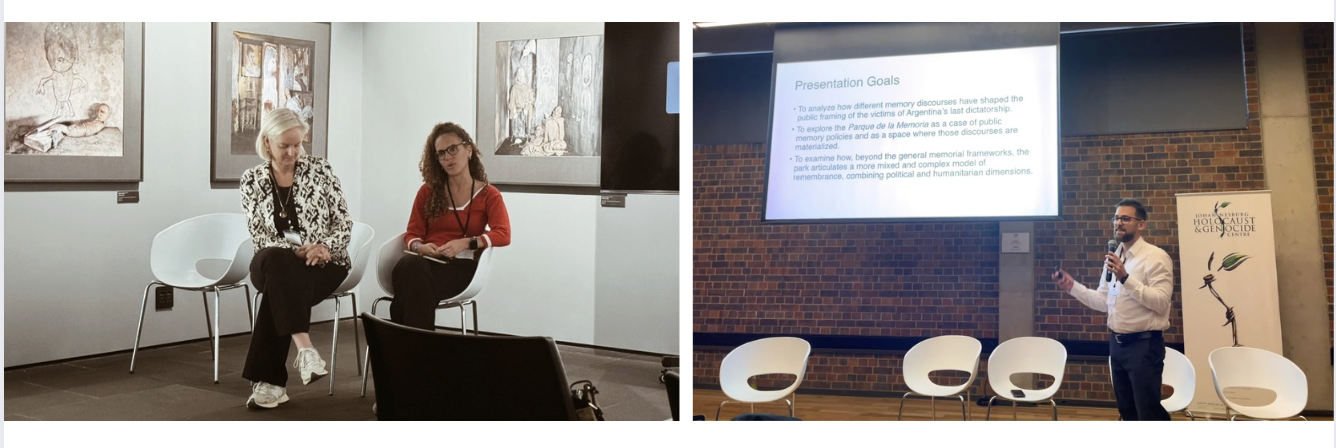
A Associação Internacional de Estudiosos do Genocídio (IAGS) reúne pessoas de todo o mundo que dedicam seu trabalho à compreensão e à prevenção do genocídio e das atrocidades em massa. A conferência deste ano, realizada em Joanesburgo, na África do Sul, reuniu acadêmicos, educadores e profissionais para refletir sobre como a memória, a justiça e a prevenção se interligam no mundo atual. Representando o Instituto Auschwitz, nós — Paula Alves, Coordenadora do Programa de Políticas Educacionais Warren, e Iván Wrobel, Coordenador do Programa de Pesquisa e Educação Online — tivemos a honra de participar e compartilhar nosso trabalho após a seleção de nosso resumo para apresentação.
Attending our first International Association for Genocide Studies International Conference on Genocide Prevention Studies was both exciting and deeply meaningful. As long-term program staff of the Auschwitz Institute, we went in with curiosity — eager to learn, meet people from diverse disciplines and parts of the world, and see how our work on genocide prevention connects with the broader field. Through our work with the Auschwitz Institute, we have learned that prevention is not only about policies or frameworks; it is about people, memory, and the fragile yet powerful thread that connects them.
The conference took place at a time when the world feels increasingly tense and uncertain, with multiple ongoing conflicts — from Ukraine and Gaza to Sudan, among others — heightening risks for vulnerable groups across the globe. Discussing these challenges with others — the fragility of democracy, the difficulties of coexistence, and the role of education — reminded us that dialogue itself is an act of resistance. Being at the Johannesburg Holocaust & Genocide Centre, a place that holds the memory of humanity's capacity for both cruelty and courage, felt deeply symbolic.
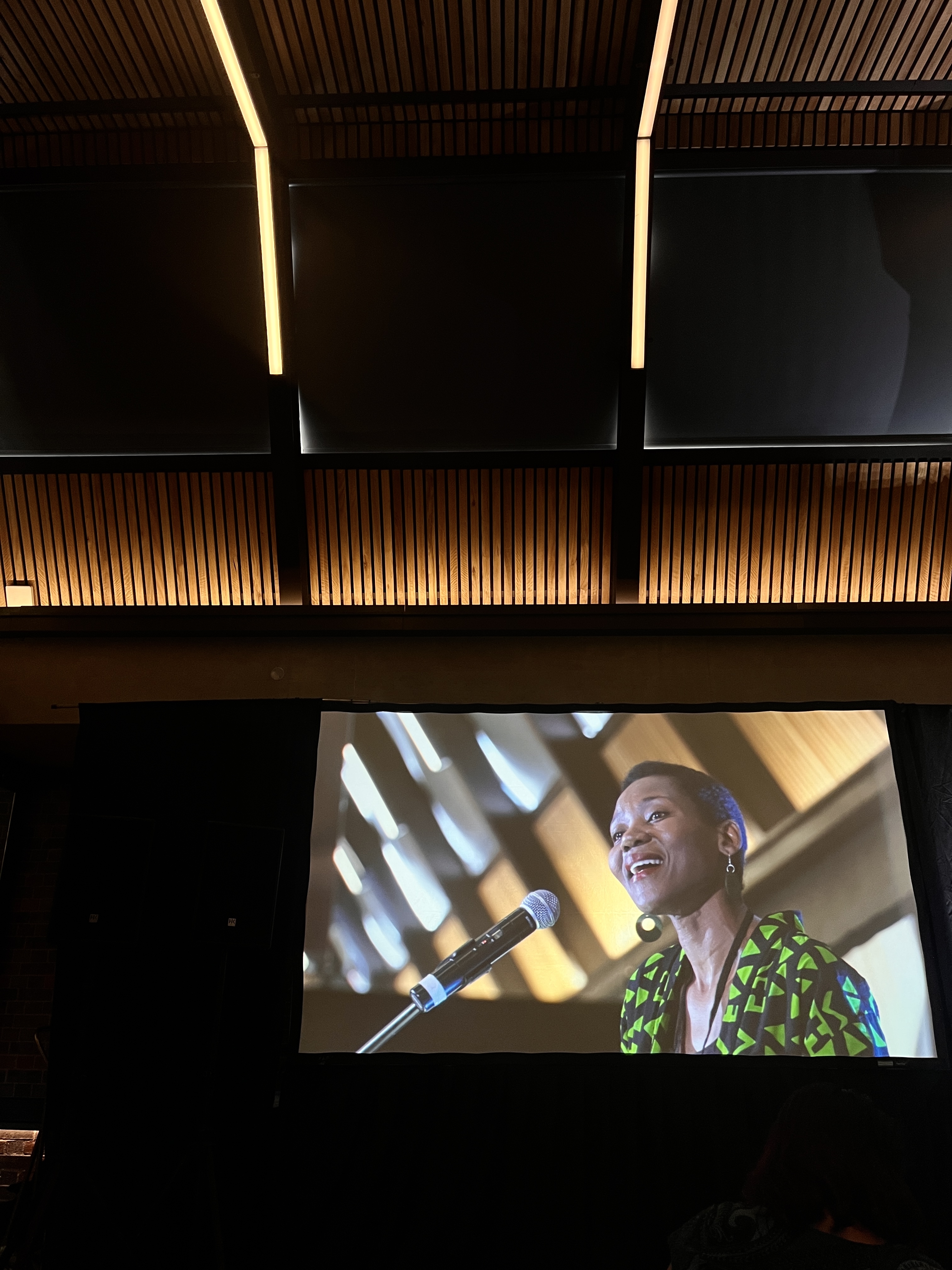
Among the moments that stayed with us was Professor Puleng Segalo's keynote address, "Gendered Trauma and Justice: The Unseen Dimensions of Genocide and Mass Violence." A Chief Albert Luthuli Research Chair at the University of South Africa, Professor Segalo reflected on the gendered dimensions of genocide — how art can give form to what words cannot, and how justice must remain central to any act of forgiveness. Her work, which bridges historical trauma, decolonization, and visual methodologies, offered a profound reminder of how research and artistic practice can open space for expressing the unspeakable. Her words echoed beyond the conference hall, grounding our conversations in lived realities.
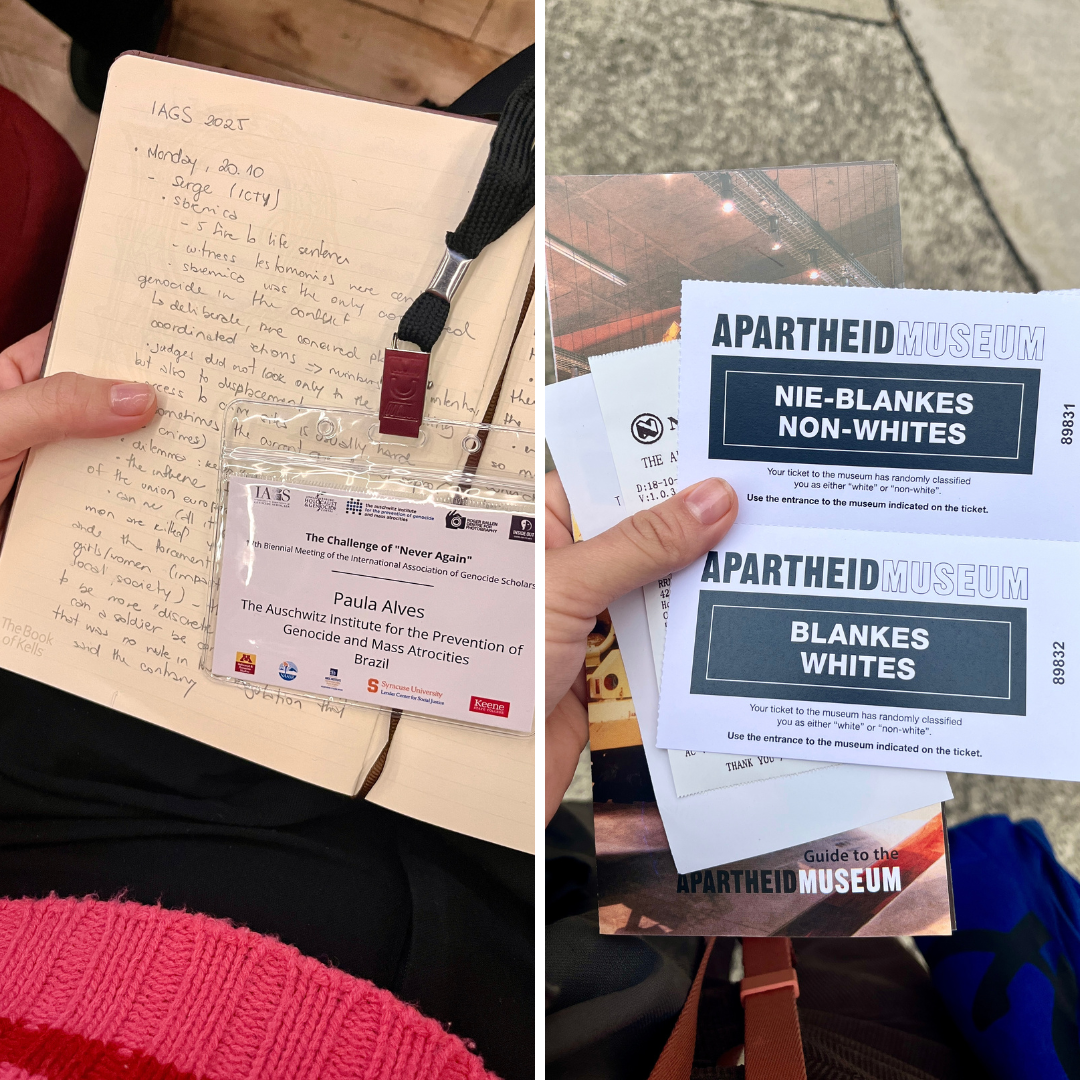
Outside the conference, visiting the Apartheid Museum and Soweto brought these reflections into sharper focus. The museum — which from the very entrance assigns visitors different racial categories and paths — compels each person to experience, even if only for a moment, the arbitrary and violent logic of identity-based segregation. In Soweto, the enduring consequences of that system remain visible, yet so does the ongoing struggle to claim dignity and rights in its aftermath. These experiences reminded us that prevention is not a destination but a continuous commitment — one that asks us to stay attentive, to remember, and to keep working toward a more just world.
We were also proud to share the work we do at the Auschwitz Institute, grounded in the realities we know most intimately — Brazil and Argentina. In a field where local issues are often discussed by people from outside those regions, being able to speak from lived knowledge felt important. Representing voices from the Global South in a space largely shaped by perspectives from the North added another layer of meaning to the conversations.
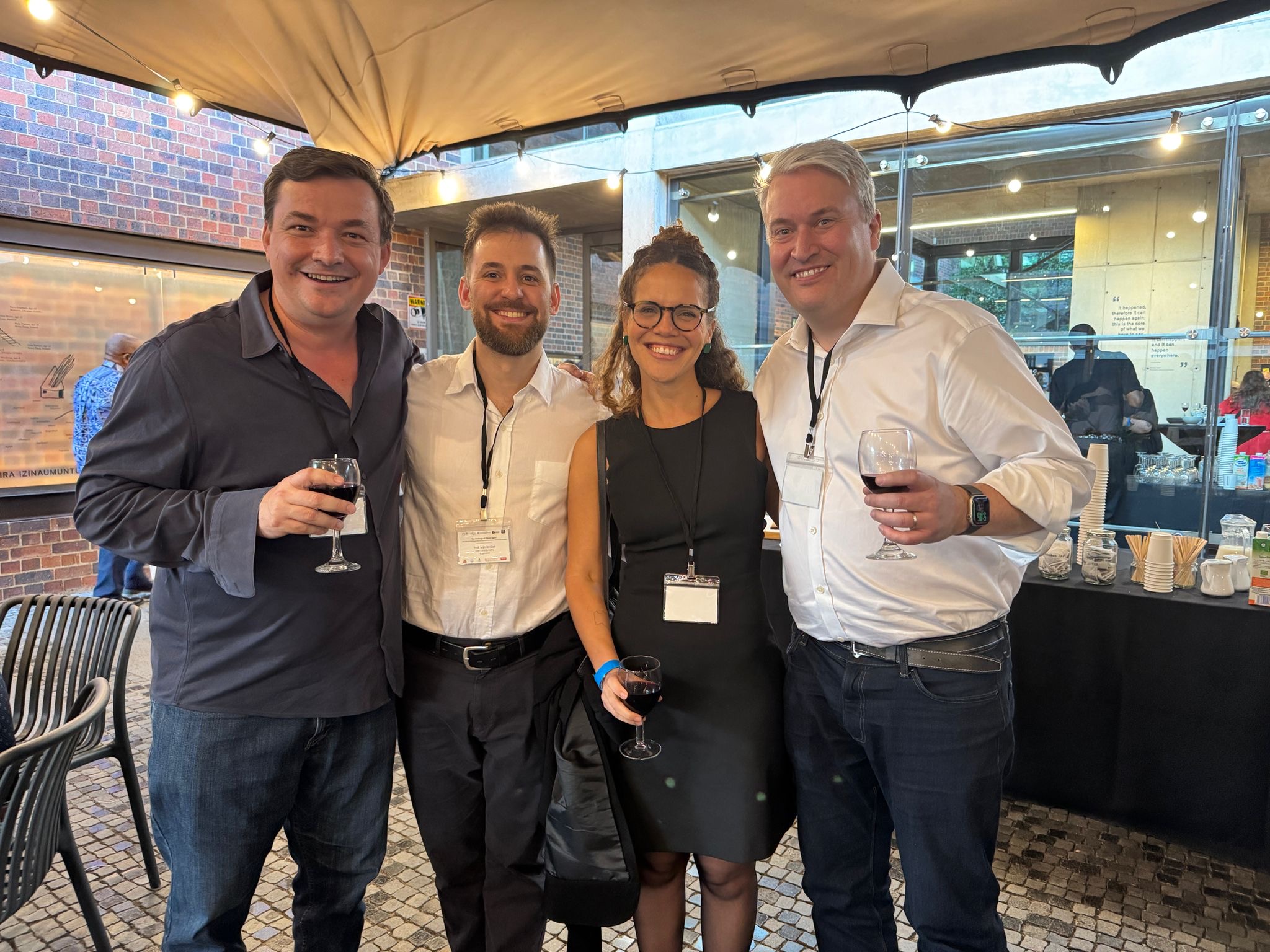
Finally, this trip gave us something we don't often get — the chance to connect with our colleagues at the Auschwitz Institute in person. Working across continents, that kind of shared time isn't common. Spending those days together — learning, exchanging, and reflecting — gave us a sense of belonging. The conference's theme, "The Challenge of 'Never Again': Engaging with Protection and Prevention of Genocide," stayed with us long after we returned home. It reminded us why we do this work: because prevention is not only about avoiding the worst of humanity but about nurturing the best of it — empathy, dialogue, and the belief in human dignity that binds us all.